

AI-Driven Predictive Maintenance System That Caught Equipment Failures Before They Shut Down the Line
The facility transitioned from a reactive maintenance culture — where breakdowns dictated the schedule — to a predictive operation where problems are identified and resolved before they cause downtime. The 60% reduction in unplanned downtime translated directly into recovered production capacity and eliminated the emergency repair costs, expedited parts charges, and overtime labor that had driven $420,000 in annual maintenance spend. With IoT sensors monitoring 28 critical assets and AI models providing days or weeks of advance warning on developing failures, the maintenance team now controls the schedule rather than reacting to it.
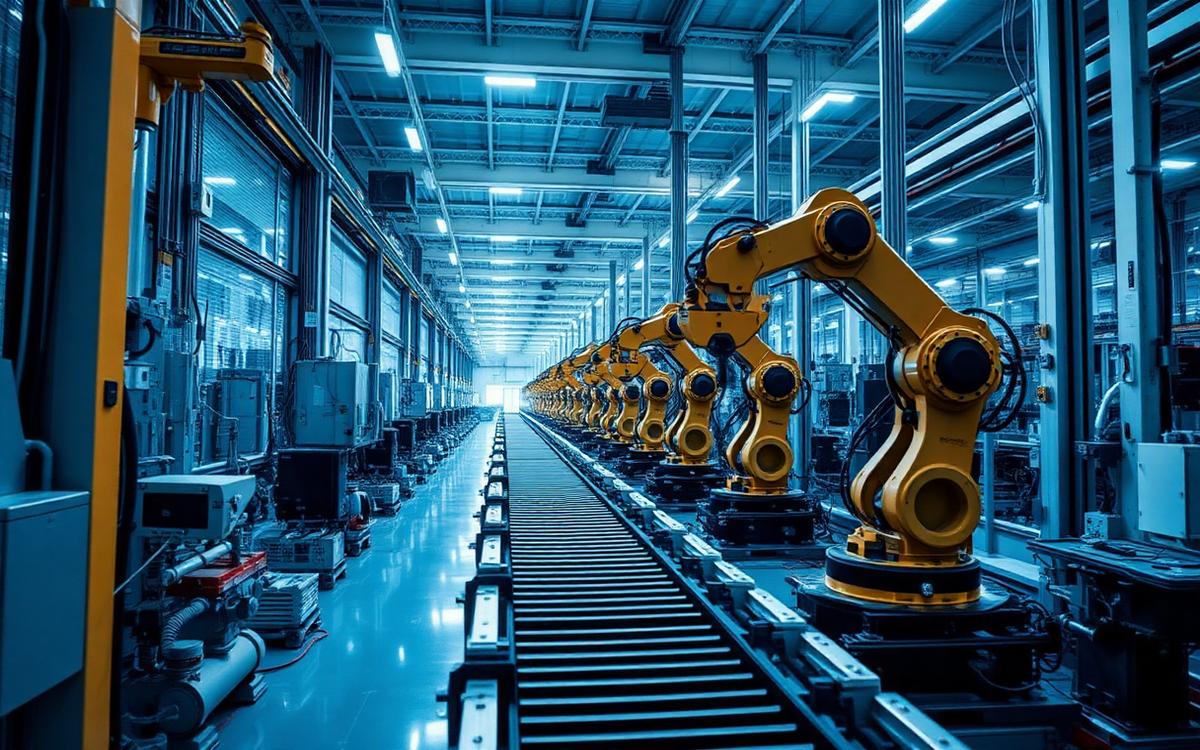
A high-speed packaging facility with 4 production lines and over 60 pieces of major equipment was spending $420,000 per year on unplanned maintenance — emergency repairs, expedited parts, overtime labor, and the lost production that accompanied every unexpected breakdown. Their maintenance approach was almost entirely reactive: run equipment until it failed, then scramble to fix it. The consequences were unpredictable downtime, frustrated operators, and a growing backlog of deferred maintenance that made catastrophic failures increasingly likely.
Client: A packaging facility
Employee Size: 95 employees
Industry: Manufacturing
Services: - Custom Software Development - AI Automation & Workflow Design - Predictive Maintenance Platform - IoT Sensor Integration
The facility operated four high-speed production lines running two shifts per day, six days per week. The equipment fleet included cartoners, case packers, palletizers, conveyors, shrink wrappers, label applicators, and supporting utilities — over 60 individual machines, many of them 8 to 15 years old. Maintenance was managed by a team of 6 technicians and a maintenance manager using a whiteboard, a shared spreadsheet, and a filing cabinet of equipment manuals.
Unplanned downtime was the company's single largest operational cost outside of raw materials and labor. In the 12 months before engagement, the facility had experienced 147 unplanned downtime events totaling 612 hours of lost production. The average event lasted 4.2 hours, but three catastrophic failures — a gearbox seizure on a palletizer, a servo drive failure on the primary cartoner, and a conveyor chain break — had each caused 24+ hours of downtime and required emergency parts shipments at premium freight costs.
Preventive maintenance schedules existed on paper but were followed inconsistently. Technicians were so consumed by reactive repairs that scheduled PM tasks were routinely deferred. The maintenance manager estimated that only 35% of scheduled preventive maintenance was actually completed on time. Deferred maintenance created a vicious cycle — the more PMs were skipped, the more breakdowns occurred, the less time was available for PMs.
There was no condition-based monitoring of any kind. Equipment ran without sensors tracking vibration, temperature, current draw, or other indicators that could signal developing problems. Technicians relied on their experience — listening for unusual sounds, feeling for excessive vibration, watching for performance degradation. This tribal knowledge was valuable but inconsistent, subjective, and dependent on specific individuals being present.
Spare parts management was equally reactive. Critical spares were stocked based on gut feel rather than failure data. The facility had experienced two instances in the past year where a breakdown was extended by 18+ hours because the required part was not in stock and had to be overnighted from the manufacturer.
JSG designed and deployed an AI-driven predictive maintenance platform that combined IoT sensor data, machine learning anomaly detection, and automated maintenance workflows to shift the facility from reactive to predictive maintenance operations.
Key Components
IoT Sensor Network Vibration, temperature, and current sensors were installed on the 28 highest-criticality machines across all four production lines. Azure IoT Hub ingested sensor telemetry at 1-second intervals, creating a continuous stream of equipment health data that had never existed before. Sensor installation was completed during scheduled weekend shutdowns with zero impact to production.
AI-Powered Anomaly Detection & Failure Prediction Azure OpenAI models were trained on three months of baseline sensor data to establish normal operating patterns for each machine. The models then continuously compared real-time sensor readings against learned baselines to detect anomalies — subtle deviations in vibration frequency, temperature trends, or current draw patterns that indicated developing problems. The system generated failure probability scores and estimated time-to-failure windows, giving maintenance days or weeks of lead time instead of zero.
Predictive Maintenance Scheduling When the AI model identified a developing issue, the system automatically generated a maintenance work order with the predicted failure mode, recommended corrective action, estimated urgency, and required parts. Maintenance could then schedule the repair during planned downtime windows rather than scrambling after a failure.
Automated Technician Dispatch & Alerting N8N workflows routed maintenance tickets based on urgency, technician skill set, and current workload. Critical alerts — high-probability failures on bottleneck equipment — triggered immediate SMS notifications to the maintenance manager and on-shift lead technician. Lower-urgency items were queued for the next planned maintenance window.
Equipment Health Dashboards Power BI dashboards provided real-time visibility into the health status of every monitored machine. A fleet-level view showed green/yellow/red status for all 28 monitored assets. Drill-down views displayed sensor trends, anomaly history, and maintenance history for individual machines. The maintenance manager reviewed the dashboard at the start of every shift to prioritize the team's work.
Spare Parts Optimization Failure prediction data was used to optimize spare parts stocking. The system tracked which parts were associated with predicted failure modes and flagged when critical spares were not in stock. Over the first six months, the facility adjusted their spare parts inventory to ensure coverage for the failure modes the AI model was predicting most frequently.
## Quantifiable Impact
- Unplanned downtime reduced by 60% (from 612 hours/year to 245 hours/year)
- Unplanned downtime events reduced from 147 to 58 in the first 12 months
- Average downtime duration per event reduced from 4.2 hours to 2.8 hours
- Zero catastrophic failures (24+ hour events) since implementation — previously averaging 3 per year
- Annual unplanned maintenance costs reduced from $420,000 to $178,000 (58% reduction)
- Preventive/predictive maintenance completion rate improved from 35% to 89%
- Spare parts-related downtime extensions eliminated through proactive stocking
- Equipment lifespan on monitored assets projected to increase by 15-25% based on reduced stress from early intervention
- Frontend: Next.js
- Backend: .NET API
- Platform: TMX (maintenance work order management, equipment registry, role-based access)
- Cloud: Microsoft Azure
- Database: Azure SQL, Azure Time Series Insights (sensor telemetry storage and querying)
- IoT: Azure IoT Hub (sensor data collection from vibration, temperature, and current sensors)
- AI & Automation: Azure OpenAI (anomaly detection, failure prediction, time-to-failure estimation)
- Dashboards: Power BI (equipment health dashboards, maintenance KPI tracking, fleet status views)
- Workflow Orchestration: N8N (maintenance ticket generation, technician dispatch, alert routing, escalation chains)
- Communication: Twilio (SMS alerts for critical equipment alerts), SendGrid (daily maintenance digest emails)
Ready to Modernize Your Business?
Let's talk about where technology can move the needle first.