

Real-Time Inventory Management System That Ended the Stockout Cycle Stalling Production Lines
The company transformed from a reactive, stockout-plagued operation into a demand-driven inventory organization with real-time stock visibility across its warehouse, two production staging zones, and the receiving dock. Production lines now run uninterrupted, purchasing operates on 30-, 60-, and 90-day AI-generated forecasts instead of emergency panic buys, and leadership has real-time visibility into every SKU without relying on the tribal knowledge of a single warehouse supervisor. The automated reorder engine and tiered escalation alerts eliminated the conditions that had caused recurring stockout incidents and the tens of thousands of dollars in idle labor and missed delivery windows that came with each one.
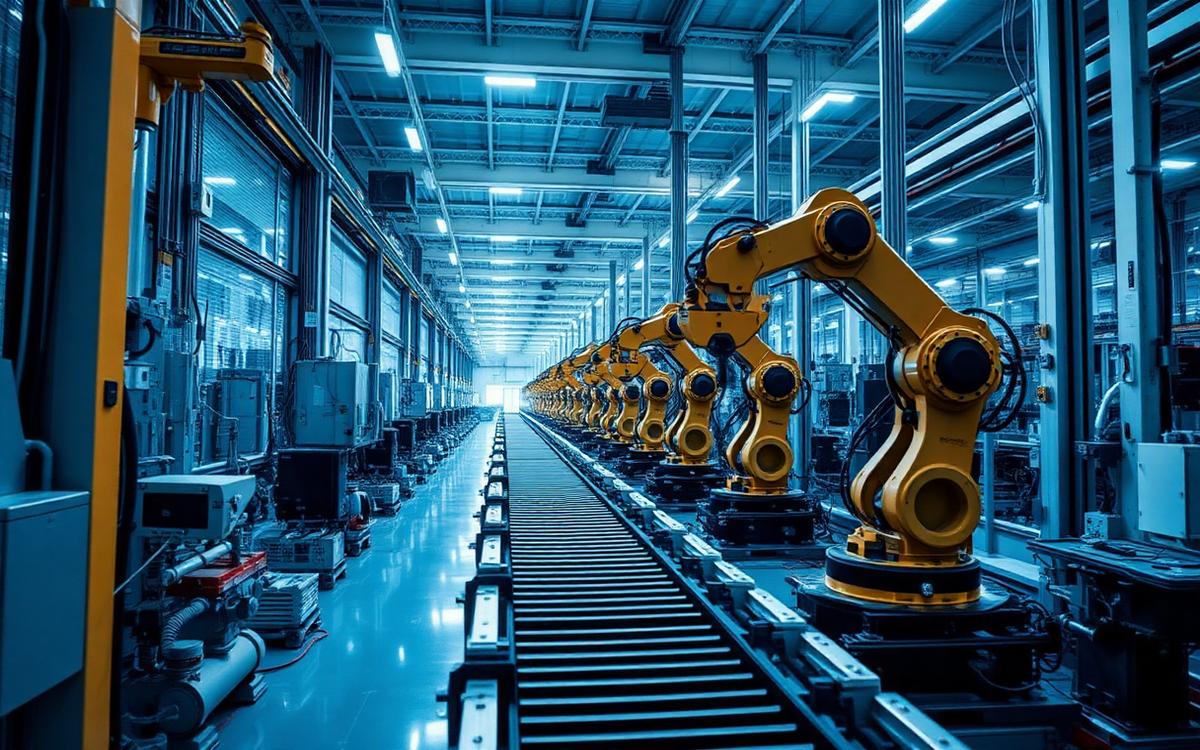
A discrete electronics manufacturer had been battling recurring stockouts for over three years. Every time a critical component ran dry, production lines ground to a halt, costing the company tens of thousands of dollars per incident in idle labor and missed delivery windows. Their inventory process was a patchwork of spreadsheets, manual cycle counts, and tribal knowledge held by a single warehouse supervisor.
With 1,200+ active SKUs spread across a main warehouse and two production staging areas, the company needed a system that could track stock in real time, predict demand before shortages materialized, and trigger reorders automatically without human intervention.
Client: A discrete electronics manufacturer
Employee Size: 75 employees
Industry: Manufacturing
Services: - Custom Software Development - AI Automation & Workflow Design - Inventory Management System - Cloud Infrastructure
The company had been operating for 10 years and had grown from a single-line shop into a two-line operation producing circuit boards, sensor assemblies, and control modules. That growth was never matched by an investment in inventory infrastructure. The warehouse team still relied on a shared Excel workbook updated once per shift to track stock levels across 1,200+ SKUs.
Stockouts were happening an average of 6.8 times per month. Each event stalled one or both production lines for anywhere between 2 and 14 hours while purchasing scrambled to place emergency orders. Emergency freight charges alone were costing $8,400 per month on average. Worse, the company was missing committed ship dates, and two of their largest OEM customers had begun issuing formal warnings about delivery reliability.
Excess inventory was the flip side of the same problem. Without reliable demand signals, purchasing over-ordered "just in case," tying up roughly $340,000 in slow-moving or obsolete stock. Warehouse space was at capacity, and the company was evaluating a costly lease expansion that leadership wanted to avoid.
Reorder points were set manually and rarely updated. The warehouse supervisor who maintained the master spreadsheet had built personal rules of thumb over a decade, but those rules were undocumented and invisible to everyone else. When he took a two-week vacation the previous summer, three separate stockouts occurred in a single week because no one else understood the reorder logic.
The company needed a system that would provide real-time visibility into every SKU across every location, forecast demand based on production schedules and historical usage, and trigger reorders automatically with the right quantities at the right time.
JSG designed and implemented a real-time inventory management platform built on the TMX engine, integrating warehouse operations, production floor consumption, and procurement into a single system of record.
Key Components
Live Inventory Tracking Engine A centralized inventory platform was deployed to track every SKU in real time across the main warehouse, two production staging zones, and the receiving dock. Barcode scanning at every movement point replaced manual spreadsheet updates, ensuring stock levels were accurate to within minutes rather than shifts.
Automated Reorder Triggers Dynamic reorder points were configured for every SKU based on lead time, consumption rate, and safety stock thresholds. When stock crossed a reorder threshold, the system automatically generated a purchase requisition, routed it for approval, and transmitted the PO to the supplier — eliminating the manual purchasing cycle entirely.
AI-Powered Demand Forecasting An Azure AI forecasting model was trained on 18 months of historical consumption data, open production orders, and seasonal patterns. The model projected SKU-level demand 30, 60, and 90 days out, allowing purchasing to get ahead of demand spikes rather than reacting to them.
Low-Stock Escalation Workflows N8N automation workflows monitored inventory levels continuously and triggered escalation alerts when stock fell below critical thresholds. Alerts were tiered — a first warning went to the warehouse lead, a second to the purchasing manager, and a third to the plant manager if no action was taken within a configurable window.
Floor Manager Mobile App A Power Apps mobile application gave floor managers and line supervisors instant visibility into stock levels from the production floor. They could check component availability, flag discrepancies, and request emergency pulls without leaving the line or calling the warehouse.
Barcode Scanning Integration Handheld barcode scanners were deployed at receiving, put-away, pick, and consumption points. Every inventory transaction was captured at the point of action, eliminating the lag between physical movement and system updates that had caused phantom stockouts in the past.
## Quantifiable Impact
- 55% reduction in stockout events (from 6.8/month to 3.1/month in the first 90 days, dropping to 1.2/month by month six)
- 100% elimination of production line stalls caused by inventory gaps after month four
- $340,000 in excess inventory reduced by 38% ($129,200 freed) within the first six months
- Emergency freight costs dropped from $8,400/month to $1,100/month
- Reorder accuracy improved from 61% to 94% (right item, right quantity, right time)
- Cycle count accuracy increased from 72% to 97.3%
- Frontend: Next.js
- Backend: .NET API
- Platform: TMX (inventory engine, SKU management, reorder logic, role-based access)
- Cloud: Microsoft Azure
- Database: Azure SQL
- AI & Automation: Azure AI (demand forecasting model, consumption pattern analysis)
- Workflow Orchestration: N8N (automated reorder triggers, low-stock escalation chains, receiving notifications)
- Mobile: Power Apps (floor manager stock checks, discrepancy flagging)
- Hardware Integration: Barcode scanners (Zebra TC21) at all inventory movement points
- Integrations: QuickBooks (PO and invoice sync), supplier EDI connections
Ready to Modernize Your Business?
Let's talk about where technology can move the needle first.