

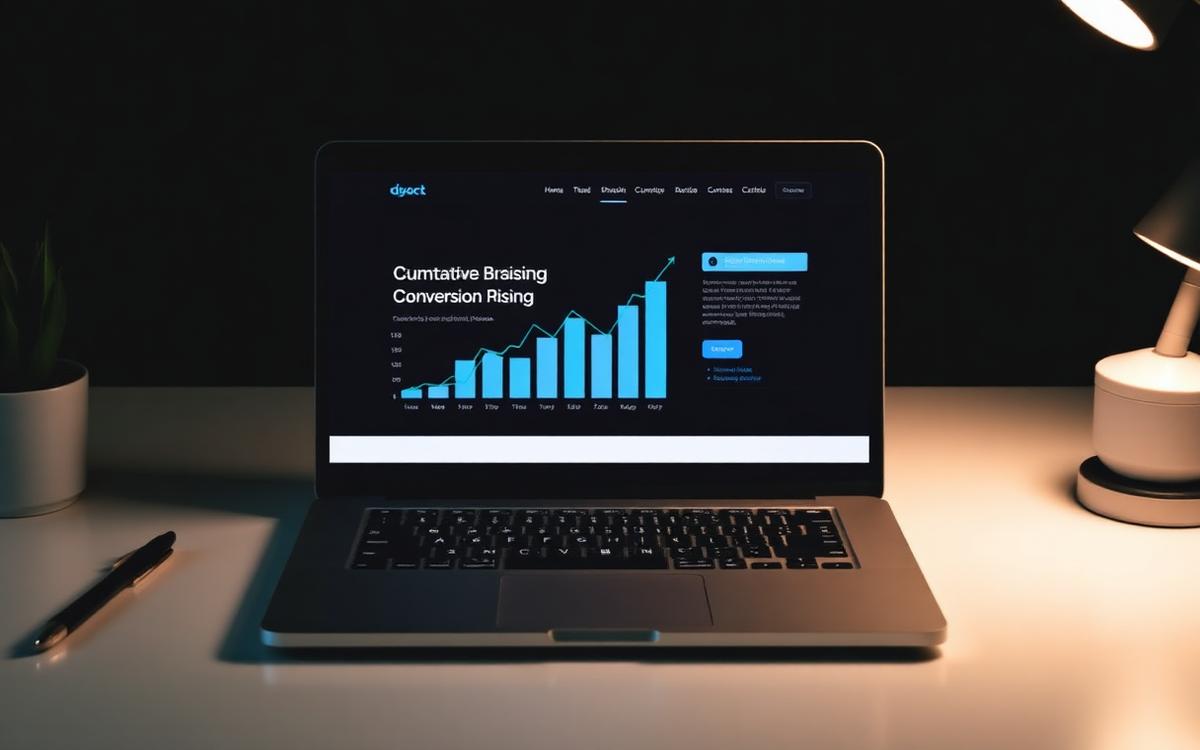
Most business websites look professional but fail to convert visitors into leads. Here is why that happens and what a conversion-focused redesign actually looks like.
Introduction
You have a website. It looks decent. It lists your services, shows some photos, maybe has a phone number in the header. And yet, despite getting traffic, it is not generating the leads your business needs to grow.
You are not alone. The vast majority of small and mid-sized business websites function as digital brochures -- they exist, they look fine, but they do not actively convert visitors into customers. There is no structured path for a visitor to take action. No intelligent intake. No conversion tracking. No way to know what is working and what is not.
The result is a website that costs money to maintain but produces little measurable return. Meanwhile, your competitors who have invested in conversion-focused design are capturing the same customers you are missing.
The Problem
The gap between a website that "exists" and a website that "generates revenue" is enormous, and most business owners do not realize how much opportunity they are leaving on the table.
- What is happening: Most business websites are built for aesthetics, not for conversion. They lack clear calls-to-action, have no structured way for visitors to submit service requests, and provide no fallback for missed phone calls. Visitors land on the site, browse for a few seconds, and leave without taking any action. The business never captures their information.
- Why it matters: Your website is often the first interaction a potential customer has with your business. If the experience is confusing, if there is no obvious next step, or if the visitor has to hunt for a phone number, you lose them. In service industries, the first company to respond typically wins the job. A slow or friction-filled website puts you at the back of the line.
- Who it affects: Every service business that depends on inbound leads. HVAC companies, plumbing contractors, electrical firms, professional service providers -- anyone whose customers are searching online for a solution. If your website is not actively capturing and qualifying those visitors, you are paying for traffic that generates nothing.
A common misconception is that driving more traffic will solve the problem. It will not. If your website converts at 1% instead of 5%, doubling your traffic just doubles the waste. The issue is not volume -- it is what happens when someone arrives.
The Solution
Fixing a website that does not convert is not about a fresh coat of paint. It requires rethinking the site as a lead generation engine, not a digital brochure. Every page, every element, and every interaction should guide the visitor toward a specific action.
Key Points
- Clear, Strategic Calls-to-Action Every page on your website should have a visible, obvious next step for the visitor. "Book a Service Call," "Get a Free Estimate," "Schedule Online" -- these should be impossible to miss. The CTA should be above the fold, repeated throughout the page, and designed to reduce friction. Vague language like "Contact Us" or "Learn More" does not drive action.
- Smart Intake Forms That Replace Phone Tag A structured online intake form captures all necessary job details upfront -- service type, urgency, location, availability, contact information. This eliminates the back-and-forth of phone calls and ensures that when your team receives a lead, it is complete and actionable. One HVAC company JSG redesigned went from roughly 30% of intake submissions including complete details to over 90%, dramatically reducing scheduling delays.
- Missed Call Capture and Fallback Systems During peak hours, calls get missed. Without a fallback, those customers are gone. A conversion-focused website includes mechanisms to capture leads even when calls go unanswered -- directing visitors to the online intake system, offering SMS-based booking, or triggering automated follow-ups when a call is not answered. JSG implemented this for an HVAC client and reduced missed leads from unanswered calls by 75%.
- Analytics and Conversion Tracking You cannot improve what you cannot measure. Implementing proper tracking lets you see exactly how users interact with your website -- where they click, where they drop off, which pages convert, and which do not. This data drives continuous improvement and ensures your website gets better over time, not just at launch.
In Practice
JSG partnered with an established HVAC company that had been in business for 12 years. They had a solid reputation, steady website traffic, and a 6-person team. But their website was not contributing to growth. It functioned as an online brochure -- no clear CTAs, no structured intake, no conversion tracking.
JSG redesigned the site with a single focus: turn visitors into booked service calls. The redesign included a conversion-optimized layout, smart intake forms, AI-assisted lead qualification, missed call capture, and full analytics integration.
The results were significant. The company saw a 50% increase in qualified inbound leads. Website-to-booking conversion rates increased by 3.2x. 60% of new leads were captured through online intake without a phone call. And leadership gained full visibility into how their website performed as a business tool for the first time.
The investment paid for itself within weeks, not months.
Benefits
- More qualified leads from existing traffic -- You do not need to spend more on advertising. A higher-converting website turns the traffic you already have into actual customers.
- Reduced pressure on office staff -- When customers can book online and submit complete job details themselves, your team spends less time on the phone and more time on scheduling and service delivery.
- Predictable lead flow -- A conversion-focused website creates a consistent pipeline of inbound work, reducing the feast-or-famine cycle that plagues many service businesses.
- Measurable ROI -- With proper tracking, you know exactly what your website is generating. No more guessing whether your online presence is working.
Tools & Technologies
- Next.js -- A modern web framework that enables fast, responsive, SEO-optimized websites with dynamic functionality for intake forms and booking systems.
- Google Analytics 4 / Hotjar -- Analytics tools that track user behavior, conversion rates, and engagement patterns, enabling data-driven website improvements.
- Zapier -- Connects your website to your CRM, email, and SMS systems so that every lead is automatically routed, tracked, and followed up on.
Ready to get started?
Your website should be your hardest-working employee -- generating leads, qualifying customers, and booking jobs around the clock. If it is not doing that today, it is costing you money.
JSG designs and builds conversion-focused websites specifically for service businesses. We do not just make sites that look good -- we build sites that generate measurable revenue. From smart intake to analytics to CRM integration, we handle the full stack.
Book a free 30-minute consultation to get a candid assessment of your current website and a clear roadmap for turning it into a lead generation engine. Call (240) 725-4925 or visit jsg.com.