

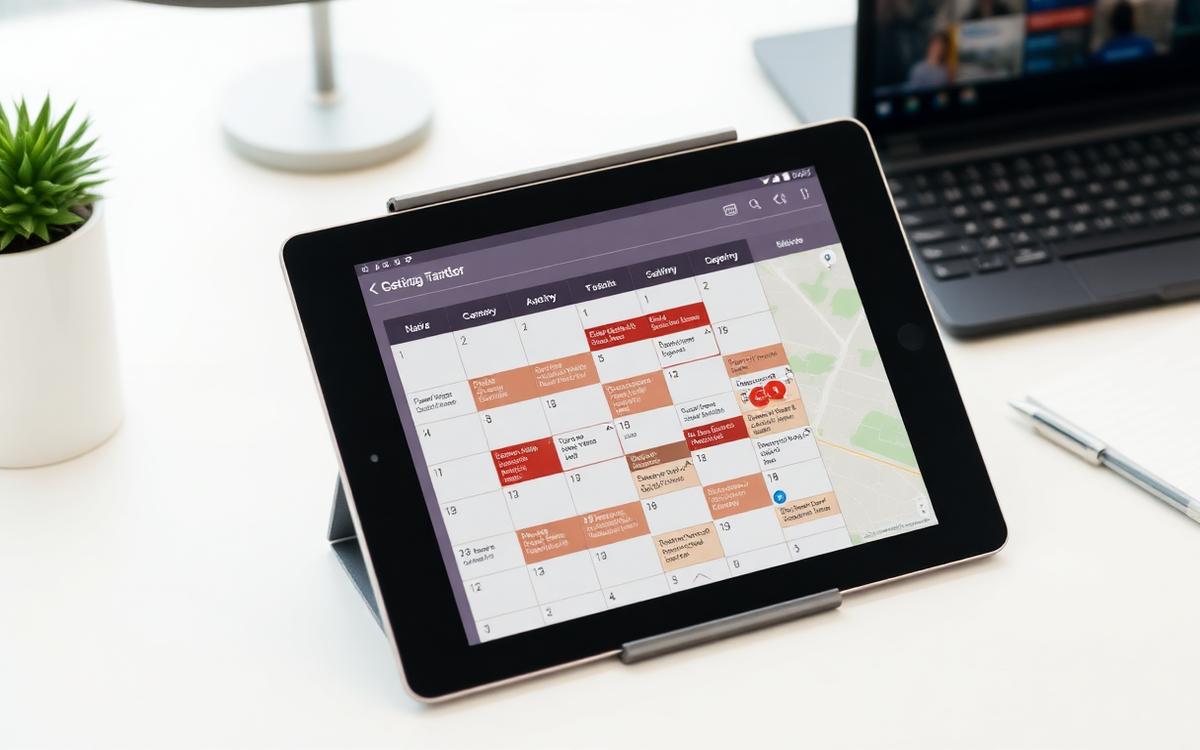
Manual scheduling wastes more money than most business owners realize. Here is the math, the real-world impact, and how automated dispatch systems eliminate the problem.
Introduction
Ask any service business owner what their biggest operational headache is, and scheduling will be near the top of the list. But most owners underestimate how much that headache actually costs.
Manual scheduling -- the kind that relies on phone calls, whiteboards, spreadsheets, and a dispatcher's memory -- does not just create frustration. It creates quantifiable financial losses that compound every single day. Wasted drive time, scheduling conflicts, missed jobs, customer no-shows, and underutilized technicians are not just annoyances. They are revenue you will never recover.
The uncomfortable truth is that if you are still scheduling manually, you are almost certainly leaving six figures on the table every year. Let us break down exactly how.
The Problem
Manual scheduling creates a cascade of inefficiencies that are easy to overlook individually but devastating in aggregate.
- What is happening: In a typical manual scheduling workflow, a dispatcher receives a service request, checks a calendar or spreadsheet, contacts the available technician, confirms the time, and updates the schedule. This process is repeated for every single job, every single day. When changes happen -- cancellations, delays, emergencies, no-shows -- the entire puzzle has to be rearranged manually. Routes are not optimized. Technician proximity is not factored in. And real-time adjustments are nearly impossible.
- Why it matters: Let us do the math. If a technician wastes just 90 minutes per day on unnecessary drive time due to poor routing, that adds up to 375 hours per year. At an average billing rate of $150 per hour, that is $56,250 in lost revenue per technician. For a team of five technicians, that number exceeds $280,000 annually. And that does not account for scheduling conflicts that result in technicians sitting idle, or customer no-shows that consume a time slot without generating revenue.
- Who it affects: Every field service business that dispatches technicians -- HVAC, plumbing, electrical, cleaning, landscaping, home services. If your technicians drive to job sites and your scheduling process involves manual coordination, you are exposed to this cost. The larger your team, the bigger the problem.
The worst part is that most owners accept this as the cost of doing business. They do not realize there is a better way because they have never seen it.
The Solution
Automated scheduling and dispatch systems eliminate the guesswork, reduce drive time, prevent conflicts, and ensure that every technician is utilized to their fullest potential. The technology is not theoretical -- it is deployed and producing results in service businesses today.
Key Points
- Route Optimization Based on Real Data Automated dispatch systems assign jobs based on technician location, proximity to the next job, traffic patterns, and availability. Instead of a dispatcher guessing who is closest, the system calculates the most efficient assignment in seconds. JSG implemented this for a 20-person HVAC company and reduced technician travel time by 30% -- immediately adding productive hours back to every workday.
- Dynamic Rescheduling in Real Time Cancellations, delays, and urgent requests are inevitable. A manual system treats each one as a disruption that requires human intervention. An automated system adjusts the entire schedule dynamically -- filling gaps, rerouting technicians, and escalating urgent jobs -- without a dispatcher picking up the phone. JSG's dispatch system reduced scheduling conflicts by 85% for one client.
- Technician Utilization Tracking Most businesses have no idea how efficiently their technicians are being used. Are they at capacity? Underbooked? Spending too much time on the road? Automated systems track utilization rates in real time, giving management the data to make staffing and routing decisions with confidence. One JSG client improved technician utilization from 60% to 82% after implementation.
- No-Show Prevention and Customer Communication Automated appointment confirmations, reminders, and day-of notifications reduce customer no-shows significantly. When a customer does cancel, the system immediately opens the slot and attempts to fill it from the waitlist or pipeline. This turns dead time into revenue-generating time.
In Practice
A fast-growing HVAC company with five service crews and 20 employees came to JSG with a familiar problem: they had more demand than they could handle, but their technicians were not completing enough jobs per day. The bottleneck was not a shortage of work or a shortage of people. It was scheduling.
Dispatch was manual. A coordinator assigned jobs based on a spreadsheet and phone calls with technicians. Routes were not optimized. Technicians frequently drove past each other going to jobs that could have been swapped. On-time arrival rates sat at 65%.
JSG designed and deployed an intelligent dispatch and routing system. Jobs were assigned based on technician location, skill set, and proximity. Schedules updated dynamically throughout the day. Technicians received job details on their mobile devices with route guidance.
Within weeks, the results were clear. Travel time dropped by 30%. Each technician completed 1.5 additional jobs per day. On-time arrivals jumped from 65% to 92%. The company increased its throughput without hiring a single new employee.
At an average job value of $250, those 1.5 extra jobs per technician per day across five crews translated to roughly $1,875 in additional daily revenue -- or nearly $490,000 annually.
Benefits
- Recaptured revenue from wasted drive time -- Optimized routing puts hours back into every technician's day, directly increasing the number of billable jobs completed.
- Fewer scheduling conflicts and errors -- Automated systems eliminate double-bookings, missed assignments, and the communication breakdowns that plague manual scheduling.
- Higher technician satisfaction -- Technicians who spend less time driving and more time working report lower stress and higher job satisfaction, reducing turnover.
- Scalable operations without proportional hiring -- When your scheduling system is efficient, you can handle 20-30% more volume with your existing team before you need to add headcount.
Tools & Technologies
- Azure AI -- Powers real-time route optimization, predictive job duration modeling, and dynamic schedule rebalancing based on field conditions.
- Google Maps Platform API -- Provides mapping, traffic data, and routing calculations that feed the dispatch optimization engine.
- N8N -- Orchestrates schedule rebalancing triggers, urgent job escalation chains, and automated technician notifications when assignments change.
Ready to get started?
Manual scheduling is not just inefficient -- it is expensive. Every day you operate without an optimized system, you are losing jobs, wasting drive time, and leaving money on the table.
JSG designs and builds intelligent dispatch and scheduling systems for service businesses. We have seen the math up close and helped companies recapture hundreds of thousands of dollars in lost productivity. If you want to know what manual scheduling is actually costing your business, we will show you.
Book a free 30-minute consultation. Call (240) 725-4925 or visit jsg.com.